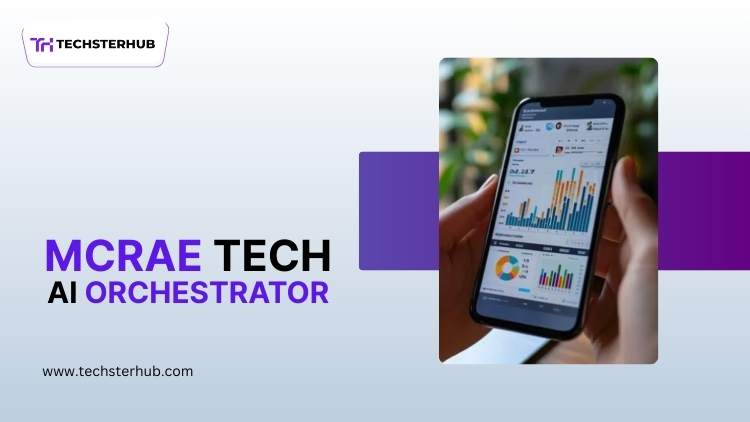
McRae Tech has officially launched its AI Orchestrator Data Platform, marking a major step forward in healthcare technology. Designed to centralise disconnected data, rationalise AI processes and implement governance at ground level, the platform helps McRae Tech to become a leader of orchestrated AI solutions for healthcare organisations working through complex digital transformation projects.
This launch comes as it becomes more apparent among hospitals, health networks and research institutions that AI alone cannot bring meaningful outcomes without having a robust data infrastructure and operational coordination.
According to the Healthcare Information and Management Systems Society, interoperability is one of healthcare’s biggest barriers to digital transformation with disconnected data pipelines continuing to stymie the adoption of clinical decision-making and analytics.
Why Healthcare AI Programmes Stumble
Healthcare organizations create enormous volumes of data ranging from electronic health records, imaging systems, labs, claims to remote monitoring devices. Yet this data is often siloed, inconsistent and a pain to integrate in the real-time.
This fragmenting poses high barriers to the scaling of AI. Models trained with partial or inconsistent data sets often produce unreliable predictions, killing trust among clinicians and administrators.
McRae Tech’s AI Orchestrator Data Platform addresses these issues by providing an intelligent coordination layer that orchestrates data, analytics, and AI models across the enterprise, ensuring accuracy, consistency, and timeliness.
Core Capabilities of the AI Orchestrator Data Platform
Unlike traditional data warehouses or analytics platforms, the AI Orchestrator Data Platform focuses on orchestration, governing how data flows and how AI models interact with that data. Key capabilities include:
- Unified Data Ingestion: Bring clinical, operational and financial data to systems while removing all silos.
- AI-Assisted Data Normalization: Resolves inconsistent data and data sets for real-time AI Modelling.
- Workflow-Oriented Orchestration: Coordinates multiple AI models to provide actionable insights directly within clinical and operational workflows.
- Centralized Governance: Tracks access, model usage and results ensuring compliance with HIPAA as well as other regulatory standards.
- Scalable Enterprise Architecture: Built to support large hospitals, regional health networks and national health systems.
By having orchestration at the data and AI level, McRae Tech has helped healthcare organizations step off the experimental AI bandwagon and get on a train running on enterprise-grade.
Practical Use Cases Driving Immediate Value
The platform has been designed keeping some applications in view:
- Clinical Decision Support: Leverages patient health data from EHRs, imaging systems and lab systems to aggregate and analyze patient data later, allowing us to see perceived risk and diagnose patients earlier and provide patient-specific treatment plans which is how we see in the future.
- Operational Efficiency: Idealizing staffing, patient movement and resource utilization in real-time to resolve critical operational issues.
- Population Health Analytics: Enables the promotion of large-scale analysis with stringent governance, which helps manage chronic diseases as well as preventative care initiatives.
- Clinical Research Enablement: Gives the researchers access to well-curated and compliant datasets for trailing and machine learning model generation without compromising patient privacy.
As highlighted in a McKinsey & Company report, healthcare initiatives that employ AI have the greatest impact when combined with workflow integration and strong data orchestration instead of using independent tools.
Governance, Compliance, and Interoperability by Design
Embedded governance and interoperability are some of the main features of the platform. The AI Orchestrator Data Platform adheres to established healthcare interoperability standards and incorporates safeguards aligned with HIPAA and industry best practices. Centralized monitoring ensures that each dataset and AI model can be traced back, so that it can be audited and under control of ever-changing rules.
The Office of the National Coordinator for Health IT emphasizes the idea that responsible data sharing and governance are foundational to the innovation in healthcare, which is why solutions such as AI orchestration that ensures accessibility but control is needed.
Importance of AI Orchestration in Scaling Healthcare AI
Traditional healthcare platforms are limited to reporting and post hoc analysis. AI orchestration usher in a turning procedure sophisticated that manages the complete AI lifecycle from executing the model to observing it and the governance.
By ensuring insights are being delivered straight to clinicians and operational teams, orchestration ensures that AI is developed from a theoretical capability to a practical tool for the delivery of care and the administrative decision-making process.
Gartner identifies AI orchestration as one of the critical capabilities for regulated industries to deploy multiple AI models in a safe, consistent, and scalable way.
Strategic Implications of Healthcare IT Leaders
For CIOs, CMIOs and data leaders, McRae Tech’s release marks a change in the way AI should be approached. Rather than putting single focus on predictive models or stand-alone analytics, enterprise AI success is increasingly dependent on the orchestration, which is infrastructure level and takes care of data and AI workflows in a cohesive manner.
Healthcare boards are demanding provable ROI, lessening of risk, and compliance with regulations. Platforms like McRae Tech’s AI Orchestrator Data Platform meet these requirements by embedding operational controls into AI deployment, ensuring scalability and trust.
Market Positioning and Competitive Differentiation
The healthcare AI market is very competitive and there are various vendors who have predictive analytics or visualization tools available. However, orchestration-based platforms such as McRae Tech are in a niche of their own as they control the way AI models interact with data and workflows at scale.
This emphasis on orchestration, governance, and enterprise integration differentiates orchestration platforms from offerings in AI available in clouds that lack even this workflow intelligence.
Analysts at McKinsey have noted that the release of AI in healthcare has achieved the greatest success when coupled with strong orchestration, integrated workflows and governance rather than using isolated model deployment.
Why This Launch Matters Now
Healthcare is undergoing a maturity phase of AI. Questions are being asked from a range of stakeholders: regulators, clinicians and executives, who are demanding explainable, governable and operationally reliable solutions. McRae Tech’s AI Orchestrator Data Platform directly addresses these expectations, enabling healthcare organizations to move beyond AI experimentation into enterprise-ready deployment.
Final Analysis
McRae Tech’s AI Orchestrator Data Platform tackles the foundational barriers that have limited AI adoption in healthcare for years. By implementing orchestration, governance, and workflow integration at the enterprise level, the platform makes AI a more-than-now novelty from the pilot phase of an organisation and into a more reliable, scalable, and trustworthy capability.
This launch marks an important moment in the digital transformation of healthcare – in which coordination, compliance and operational excellence are just as important as the AI itself.