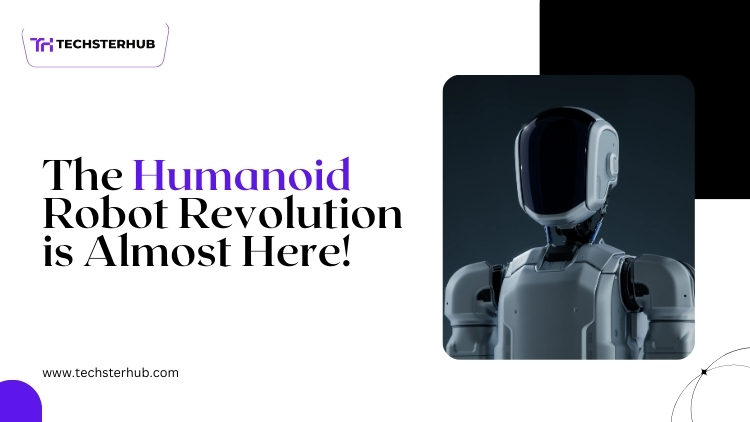
Nvidia CEO Jensen Huang announced to the tech industry that the arrival of humanoid robots is nearer than most assume. The swift technological advancements in AI and robotics today validate Huang’s observations about the transition of humanoid robots from science fiction concepts to real-world technology.
Human-like robots will transform industries while enhancing everyday life and changing how we work in the future. What does the term “robot revolution” represent and why are these changes happening at such an accelerated pace? The following analysis focuses on Nvidia’s leadership role in AI technology that drives the current robotics revolution.
Who is Nvidia?
Nvidia began operations in 1993 and now stands as a top international developer of graphics processing units (GPUs) that support gaming applications as well as artificial intelligence research and high-performance computing tasks. Nvidia initially gained recognition through its innovative graphics cards for gaming but has now extended its reach into AI technology and autonomous vehicles as well as robotics. Researchers and engineers worldwide apply Nvidia’s GPUs to run AI algorithms and process complex data while simulating virtual environments.
Nvidia’s technology has played a central role in the advancement of autonomous systems like robots during recent times. Through their AI-powered platforms alongside graphics processing units Nvidia leads the charge in the development of humanoid robots. The company’s innovations allow robots to perform movements resembling natural actions and learn tasks while interacting with their environment in previously unimaginable ways.
What is a Humanoid Robot?
Humanoid robots serve as machines engineered to imitate human movements and behaviors while sometimes being capable of expressing emotions. Humanoid robots differ from traditional robots because they possess a structure that resembles human anatomy including two arms and two legs with a head. With their advanced sensors and cameras paired with AI systems they can engage with their surroundings while identifying objects and understanding verbal instructions to make decisions.
Humanoid robots perform tasks designed around human needs such as home assistance, healthcare support and customer service and they can also handle complex roles like caregiving education and entertainment. These robots need to learn how to handle multiple real-world scenarios similarly to human behavior.
Why is the Humanoid Robot Revolution Happening Now?
Recent technological advancements provide the basis for Jensen Huang’s assertion that humanoid robots will revolutionize our world sooner than anticipated. Now we will examine the elements that are propelling this revolution forward.
- AI Advancements
Recent advancements in artificial intelligence have led machines to develop superior abilities in learning, reasoning and decision-making. Through its GPUs Nvidia’s AI platforms enable robots to process large data volumes simultaneously while learning new tasks and adapting to environmental changes in real time. Humanoid robots need this AI-powered function to intelligently explore their surroundings and interact with humans by recognizing objects and responding to human behaviors. - Robotic Mobility
Robots have faced mobility restrictions throughout history. The robots had the choice to operate in controlled conditions or move according to pre-programmed patterns. The latest advancements in robotic mobility now allow humanoid robots to move with greater fluidity and interact with their environment through complex methods.
The Nvidia Isaac platform enables robots to move through walking and running while maintaining balance in a way similar to humans. These robots employ their sensors and artificial intelligence systems to navigate around obstacles while adapting their movements and executing tasks in human-oriented surroundings.
- Human-Robot Interaction
Humanoid robots become functional only when they are able to communicate naturally with human beings. Natural human-robot interactions require comprehension of verbal language together with non-verbal cues like gestures and facial expressions while providing suitable responses.
Improvements in natural language processing (NLP) and speech recognition technology enable robots to develop more effective human communication capabilities. Nvidia’s AI tools play a critical role in robot development by enabling machines to understand verbal instructions and contextual signals which results in smoother and more natural interactions.
- Improved Hardware
The swift advancement of humanoid robots’ results from improved hardware technology. The market offers affordable and accessible lightweight materials together with flexible components advanced sensors and energy efficient processors. Nvidia GPUs play a vital role in powering the AI systems which manage the robot’s functionality and its ability to learn and interact with the environment. - Growing Investment in Robotics
The expansion of humanoid robot technology results from the growing financial support dedicated to robotics research and development efforts. Several prominent technology firms like Tesla, Boston Dynamics, and SoftBank are investing heavily in the creation of robots designed to perform tasks similar to those humans do. By boosting investment in humanoid robotics development we are advancing toward a future where robots become everyday household items.
How Humanoid Robots Could Transform Industries
Developments in humanoid robot technology will create significant changes across multiple industries. Now we will explore a few fields where these robots could become major players.
- Healthcare
In healthcare settings humanoid robots will become essential support members by helping doctors alongside nurses and caregivers. These robots could handle routine duties such as supply delivery while assisting patients with mobility needs and offering companionship to elderly patients. AI-powered robots could enhance medical care by diagnosing diseases and analyzing patient data to deliver tailored medical treatments. - Retail and Customer Service
Humanoid robots can function as customer service assistants within the retail sector. These robots would navigate customers through stores while answering their questions and supplying product details. These robots process repetitive tasks and allow human employees to concentrate on more complex and valuable work activities. Humanoid robots in customer service centers can engage with customers to resolve their problems while delivering support through their friendly and approachable attitude. - Home Assistance
These robots could operate as personal assistants within domestic environments. These robots can assist with cleaning jobs as well as cooking responsibilities and various home tasks which help people with busy lives or physical disabilities manage their time more effectively. Robots provide valuable companionship which benefits elderly people and individuals who live by themselves. - Manufacturing and Logistics
Humanoid robots utilized in manufacturing and logistics operations could fulfill multiple functions including product assembly and goods transportation within warehouses. These robots possess the ability to manoeuvre through intricate environments and perform physical tasks which can improve productivity while minimizing the human workforce in dangerous or monotonous jobs.
Challenges and Ethical Considerations
Humanoid robots offer tremendous benefits but pose multiple challenges alongside ethical considerations. Robots performing tasks that humans once handled brings up important questions about potential job losses. Privacy issues along with safety concerns and the manner of human interaction with humanoid robots in social environments remain problematic. Thoughtful regulations and guidelines will be essential to guarantee responsible and ethical use of these robots.
Conclusion
Jensen Huang’s claim that the humanoid robot revolution is approaching faster than expected shows the remarkable advancements currently occurring in AI and robotics technology. Recent developments in AI technology and human-robot interaction combined with enhanced robotic mobility indicate we are entering an era where humanoid robots will likely become routine elements of our everyday lives. Through its technological contributions to robot development Nvidia holds a pivotal position in directing the future of robotics.
Humanoid robots could revolutionize multiple sectors such as healthcare and manufacturing while simultaneously enhancing daily living for people. The fast-moving progress in robotics development implies that many people might underestimate how soon we will see the humanoid robot revolution. Since this technology keeps advancing we anticipate humanoid robots will become essential parts of daily life soon.