Every software vendor now calls its product agentic. Board decks promise “agentic transformation.” Yet when a leadership team is asked what agentic AI is and how it is different from the chatbot they rolled out last year, the answers often vary around the table.
This guide gives one clear answer, then the context leaders need to make decisions on: how it works, how it differs from generative AI, where it is already used in enterprises, where it fails, and what to ask before funding it.
What is agentic AI, in one sentence?
| Definition: Agentic AI is AI that works toward a goal on its own: it breaks the goal into steps, uses tools and data to carry them out, checks the results, and adjusts, with limited human supervision. |
That is the short answer to what agentic AI is. The important word is “acts.” A generative AI assistant answers a question and stops. An agentic system takes the next step itself: it opens the CRM, reads the account history, drafts the email, updates the record, and flags the deal for review. IBM describes agentic AI as a system that can accomplish a specific goal with limited supervision, built from AI agents that work toward that goal.
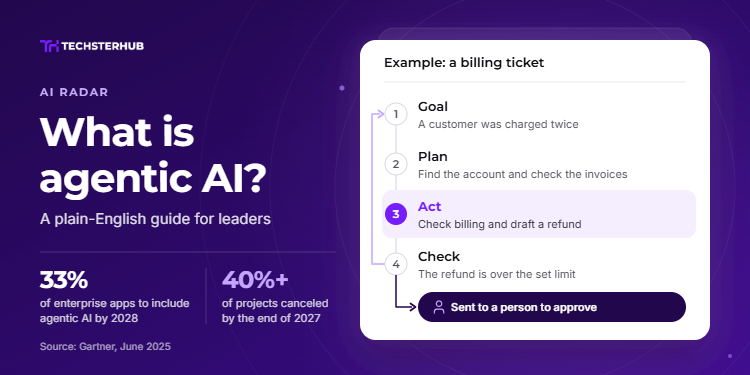
How agentic AI works: the four-step loop
Most agentic systems follow the same loop, whatever the vendor calls it.
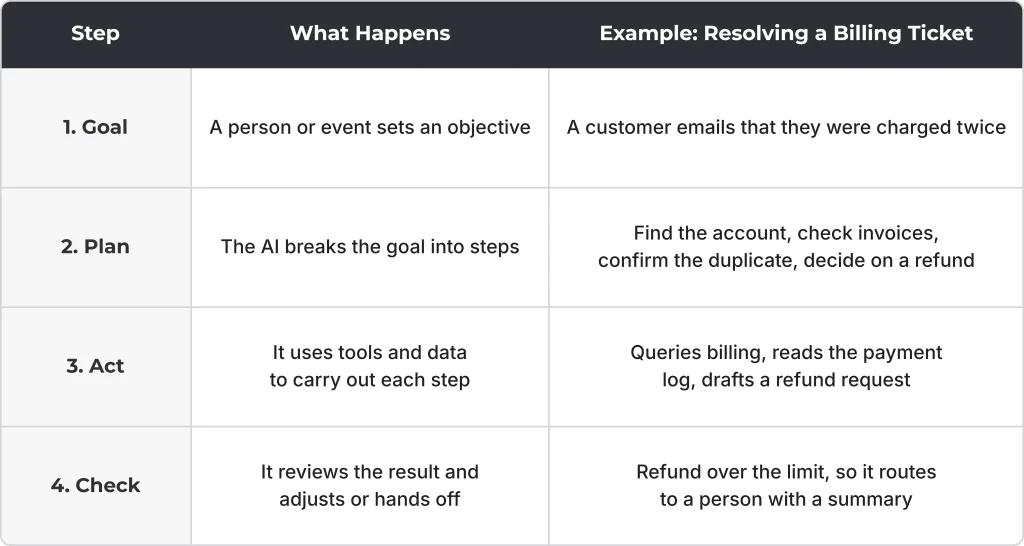
Underneath sits a large language model for reasoning, connections to business systems for action, and memory so it can keep track of what it has already done.
Agentic AI vs. generative AI
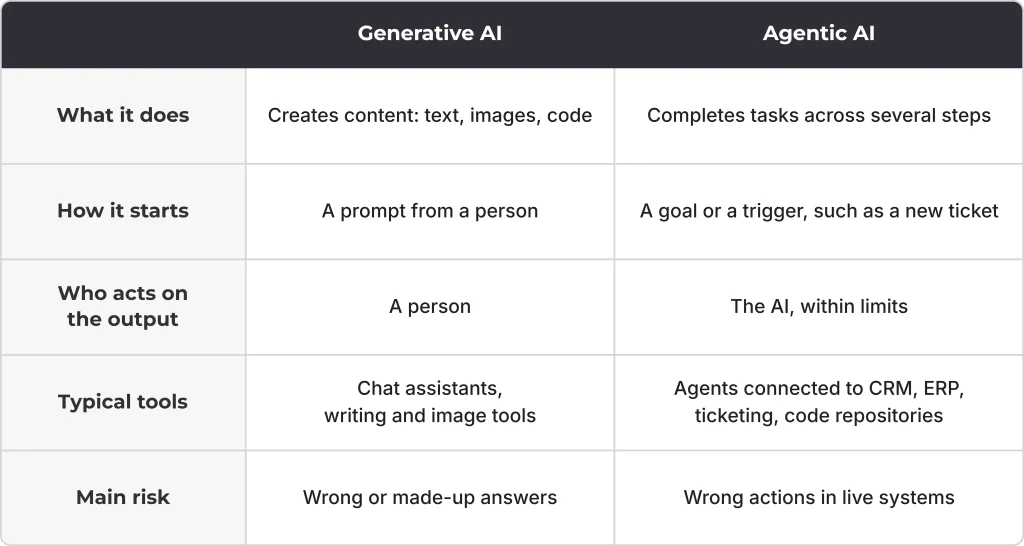
The two are not rivals. Agentic AI uses generative AI as its reasoning engine, then adds planning, tool use, and the authority to act.
AI agents vs. agentic AI
The terms are often used interchangeably, but there is a useful distinction. An AI agent is a single piece of software that can carry out tasks: a service agent, a coding agent, or a research agent. Agentic AI is the broader approach, and often a system where several agents work together, hand tasks to each other, and are coordinated toward one outcome.
For executives the practical point is simple: buying one agent is a tool decision. Building agentic workflows across departments is an operating model decision, with governance, data access, and accountability to match.
Five examples of agentic AI in the enterprise
1. Customer service: resolving cases end to end
Service agents, such as those built on Salesforce Agentforce, can answer customer questions, look up orders, and take actions within set rules, handing complex cases to a person.
2. Software engineering: from issue to pull request
Coding agents such as GitHub Copilot’s coding agent can take an assigned issue, work through the code, and open a pull request for an engineer to review. The human stays in the approval seat.
3. Research: multi-step investigation
Deep research features in enterprise assistants search many sources, read and compare them, and produce a cited report. A task that took an analyst a day can arrive as a first draft in minutes and still needs checking.
4. Sales operations: keeping the pipeline current
Sales platforms now include agents that update deal records. Outreach’s February 2026 release, for example, added a Deal Agent that can update opportunity fields automatically.
5. IT operations: triage and routine fixes
IT service agents classify incoming tickets, gather diagnostic information, suggest or apply known fixes such as access resets, and escalate the rest with a summary.
So what is agentic AI in practice? Notice the pattern across all five: each agent works inside one process, with clear limits and a hand-off to a person for anything unusual. That is what successful deployments look like today.
How much autonomy? A simple scale
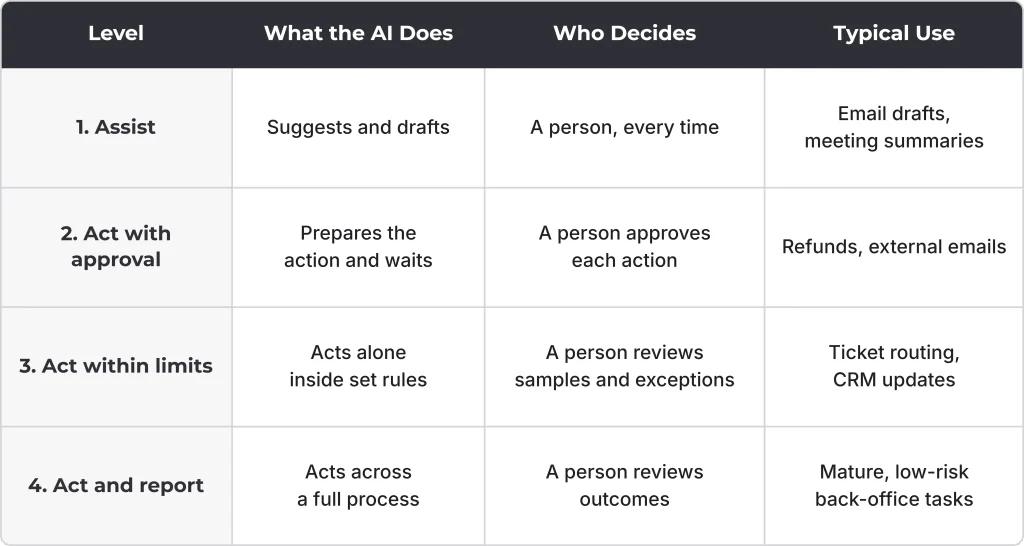
Most enterprises today run agents at levels 1 to 3. Moving a process up a level should be a deliberate decision, based on measured accuracy and the cost of a mistake.
What the forecasts say and the warning inside them
Gartner’s June 2025 forecasts, as reported by SD Times, point both ways. By 2028, Gartner expects 33% of enterprise software applications to include agentic AI and 15% of day-to-day work decisions to be made autonomously. It also predicts that over 40% of agentic AI projects will be canceled by the end of 2027 because of rising costs, unclear business value, or inadequate risk controls.
Gartner also warned about “agent washing”: vendors rebranding chatbots, assistants, and automation tools as agentic. It estimated that only about 130 of the thousands of vendors claiming agentic AI were offering real agentic capabilities.
Where agentic AI still falls short
- Reliability over long tasks: small errors early in a chain can grow into larger ones later.
- Messy data: agents act on what they can access, so poor data leads to confident, wrong actions.
- Security: agents that read external content can be manipulated by hidden instructions, known as prompt injection.
- Cost: multi-step tasks use far more computing than a single answer, and costs can rise quickly at scale.
- Accountability: when an agent makes a mistake, someone must own the outcome.
Seven questions to ask before you invest
- Which single process, with a measurable outcome, will the agent improve?
- What is the cost of a mistake, and which actions need human approval?
- Which systems and data will it access, and with whose permissions?
- How will we log and review what it does?
- How do we stop it quickly if something goes wrong?
- Who owns it in the business, and who owns it in IT?
- Is this vendor’s product truly agentic, or a rebranded assistant?
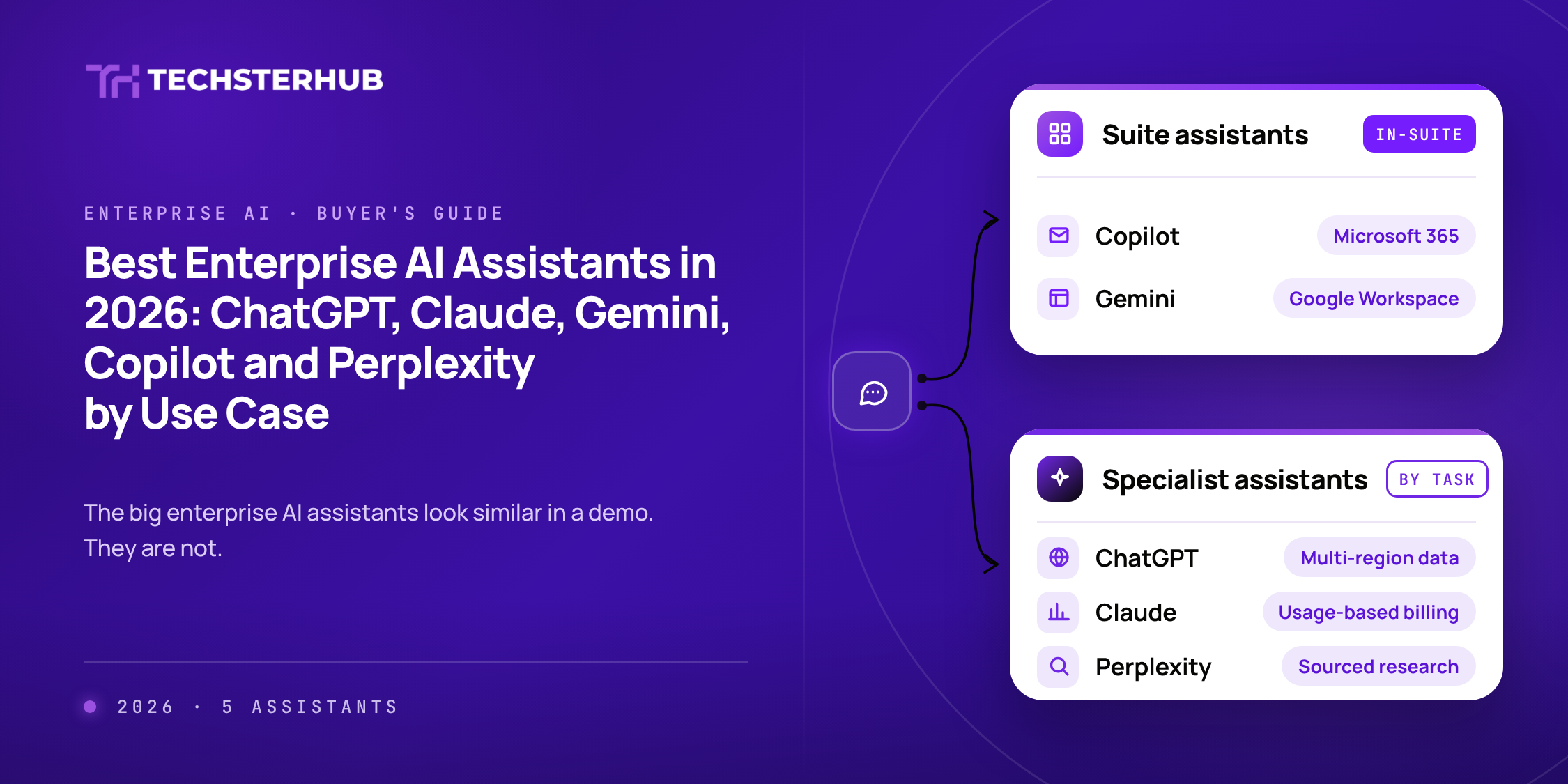
Knowing what agentic AI is is the start; deciding where it fits is the real work. For the policies and roles around these questions, read our AI governance framework. If you are comparing the assistants many agents run on, see our guide to enterprise AI assistants by use case.
FAQs:
What is agentic AI in simple terms?
It is AI that does tasks, not just answers questions. It plans steps toward a goal, uses tools to carry them out, and checks the result, with limited supervision.
What is the difference between agentic AI and generative AI?
Generative AI creates content in response to a prompt. Agentic AI uses that ability to plan and take actions across several steps toward a goal.
Are AI agents and agentic AI the same thing?
Not quite. An AI agent is one piece of software that carries out tasks, while agentic AI is the broader approach, often several agents working together.
What are examples of agentic AI?
Customer service agents that resolve cases, coding agents that open pull requests, deep research tools, agents that update CRM records, and IT agents that triage tickets.
Is agentic AI safe for enterprises?
It can be, with controls: limited permissions, human approval for high-impact actions, full logging, and a fast way to stop the agent.
Will agentic AI replace jobs?
It is changing tasks first. Today most deployments automate parts of a process and hand exceptions to people, so roles shift toward supervision and judgment.