Search for ChatGPT vs. Claude vs. Gemini, and you will find benchmark scores, writing samples, and strong opinions about which model is smartest this month. That is useful for individuals. It is close to useless for an IT or business leader choosing a company-wide plan, because model rankings change every few months and the contract lasts a year or more.
What lasts is the plan around the model: how it is priced, which apps it connects to, what admins can control, and where data is processed. This guide compares ChatGPT Enterprise, Claude Enterprise, and Gemini Enterprise on five tasks companies actually buy them for, using what each vendor documents.
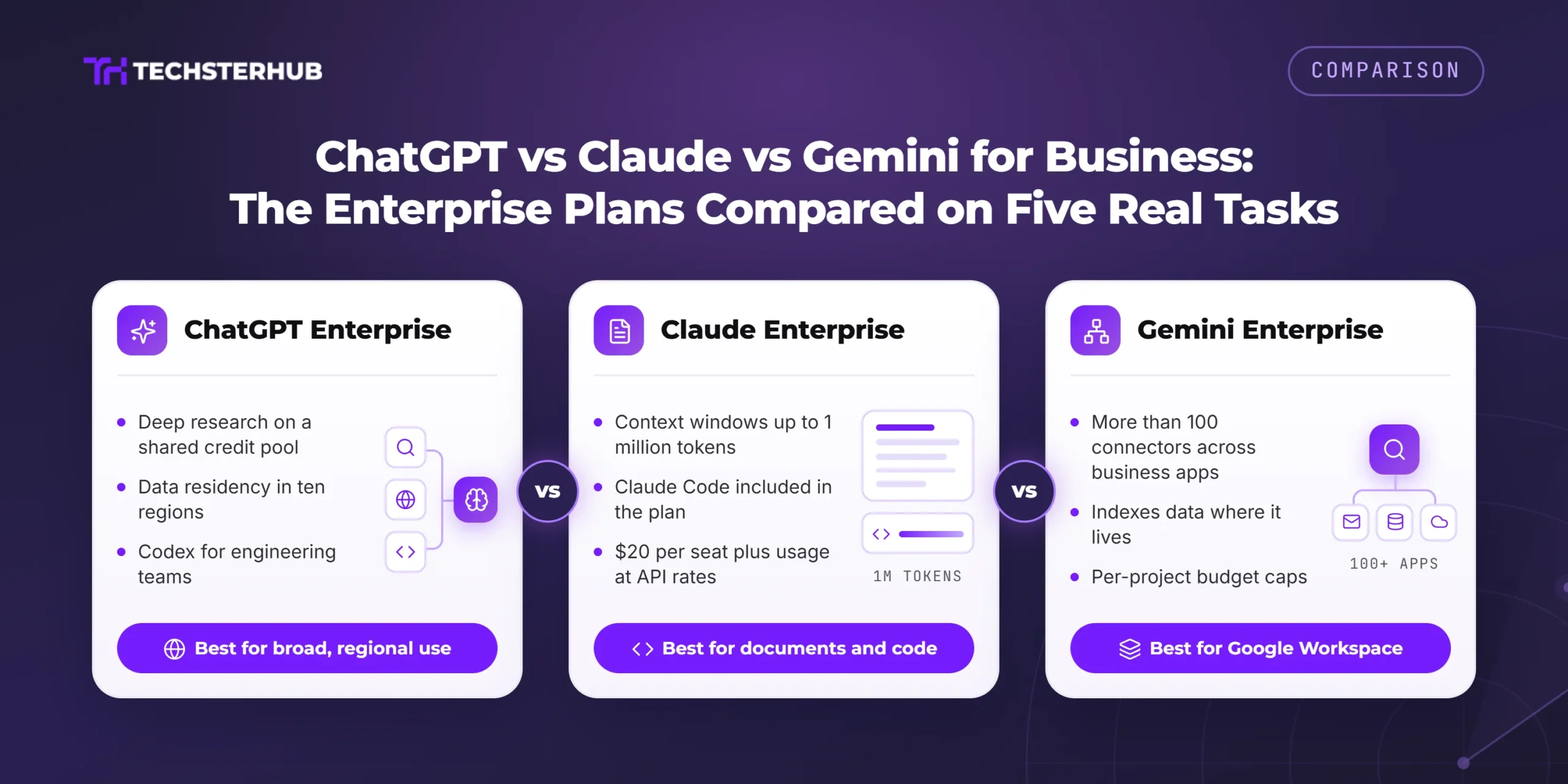
| Quick verdict: In the ChatGPT vs. Claude vs. Gemini decision for business, there is no single winner. Gemini Enterprise is the natural fit for companies built on Google Workspace that want agents across many business apps. ChatGPT Enterprise suits organizations that want a broad general assistant with deep research, data residency in ten regions, and a shared credit pool. Claude Enterprise suits teams doing long-document analysis, writing, and software development, with a published seat price plus usage. Decide by where your work happens and which controls your security team requires. |
Task 1: Working with long documents
Contracts, research reports, board packs, and policy libraries are where most knowledge workers first feel the value of an enterprise assistant. The deciding factor is how much material a plan can work with at once and how easily files reach it.
Claude’s plans list context windows of up to 1 million tokens, depending on the model, according to Claude’s pricing page. ChatGPT Enterprise lists a 128,000-token context window for its instant model, with larger limits on other models. Gemini Enterprise works across documents where they already live, indexing selected sources rather than requiring you to move them, according to Google.
If your teams regularly analyze very long documents, test the same three or four real files on each plan and compare accuracy, not just speed.
Task 2: Research with sources
All three offer multi-step research that searches, reads, and summarizes many sources into a report. The difference for buyers is cost and control.
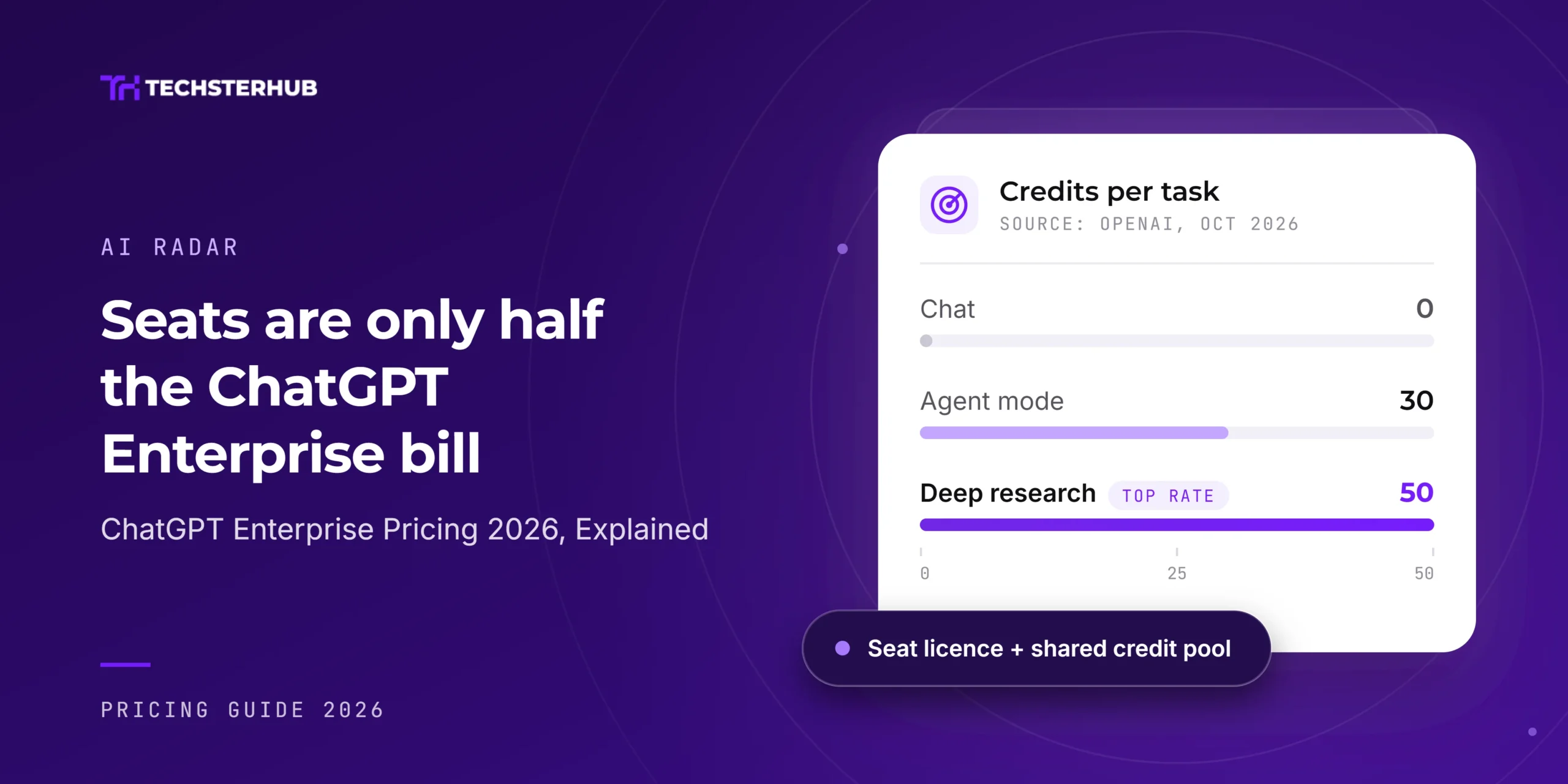
On ChatGPT Enterprise, deep research uses 50 credits per task from the company’s shared pool, per OpenAI’s flexible pricing guide. On Claude Enterprise, usage is billed at API rates on top of the seat fee, with spend limits admins can set by user and organization. Gemini Enterprise lists per-project budget caps that pause the agent rather than overspend. Heavy research teams can drive a large share of cost on any of the three, so pilot them as a separate group.
Task 3: Software development
For engineering teams, the assistant is increasingly a coding agent rather than a chat window. ChatGPT Enterprise includes Codex, which draws on credits under flexible pricing. Claude Enterprise users get Claude Code, Anthropic’s coding tool, as part of the plan. Gemini Enterprise lists engineering among its industry skills and connects to GitHub and Jira.
Ask each vendor how code and repository data are handled, which actions the agent can take without approval, and how admins control browser and computer use.
Task 4: Working across company apps
An assistant that cannot see your systems is limited to what users paste into it. Connectors decide how useful each plan becomes.
Gemini Enterprise lists more than 100 connectors, including Google Workspace, Microsoft 365, Slack, Confluence, Jira, GitHub, Salesforce, ServiceNow, and HubSpot, and runs under each user’s existing permissions. Claude’s connectors include Google Drive, Gmail, Google Calendar, GitHub, Microsoft 365, and Slack. ChatGPT Enterprise offers connected apps with admin controls over when ChatGPT asks before using them.
Map your five most-used business systems before the demo, and check each one against each plan. A long connector list matters less than whether your specific systems are covered.
Task 5: Admin, security, and data location
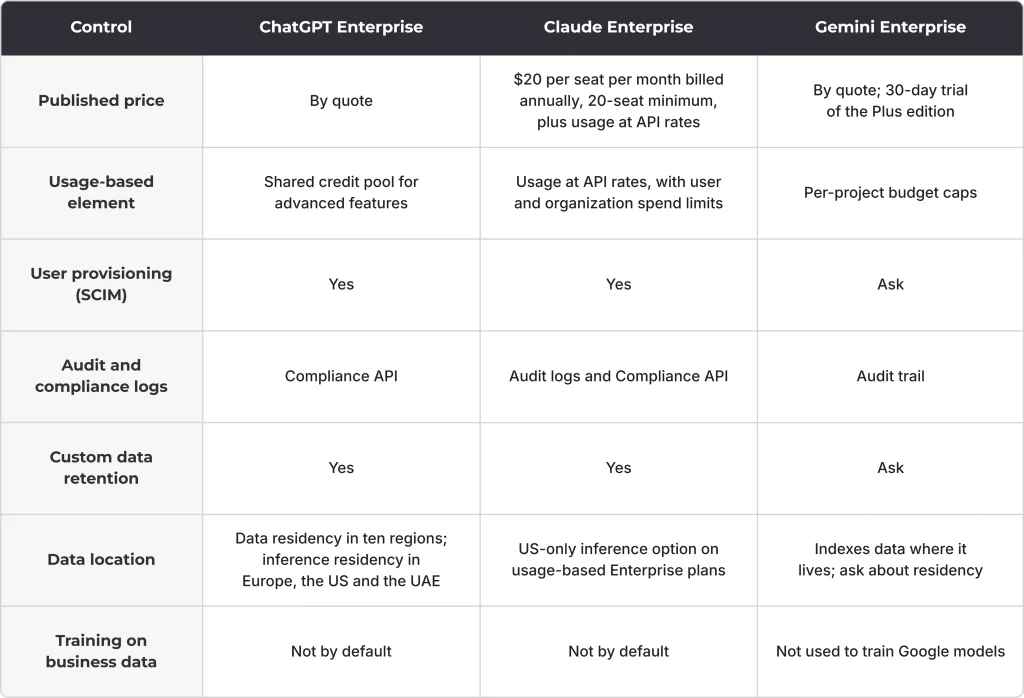
Sources: OpenAI pricing, OpenAI’s data residency guide, Claude pricing, Claude’s US-only inference article, and Gemini Enterprise, all checked on 23 October 2026. “Ask” means we did not find it stated on the vendor’s page, not that it is missing.
Two details deserve attention. Claude’s US-only inference bills usage on newer models at 1.1 times standard API rates, and it covers where responses are generated, not where data is stored. OpenAI’s residency has exclusions for connected services and some features. Read both before promising anything to a regulator.
ChatGPT vs Claude vs Gemini pricing: what each plan really costs
The three vendors price in different shapes, so seat prices alone mislead. ChatGPT Enterprise combines quoted seats with a shared credit pool. Claude Enterprise publishes its seat price and adds usage at API rates. Gemini Enterprise is quoted by Google Cloud sales. For smaller teams, ChatGPT Business and Claude Team both start at $20 per user per month billed annually.
The fair comparison is total annual cost for the same users doing the same work. Run a 30-day pilot with the same three teams on each shortlisted plan, measure usage, and ask each vendor to price the result. Our ChatGPT Enterprise pricing guide explains the credit rate card in detail.
ChatGPT vs. Claude vs. Gemini: How to Choose
- Your company runs on Google Workspace: start with Gemini Enterprise.
- Your company runs on Microsoft 365: compare Microsoft 365 Copilot alongside these three.
- You need data residency in Europe, India, or Asia Pacific: check ChatGPT Enterprise’s regions first.
- Your heaviest use is long documents, writing, or software development: include Claude Enterprise in the pilot.
- Your security team requires specific controls: build the shortlist from the admin table, then compare features.
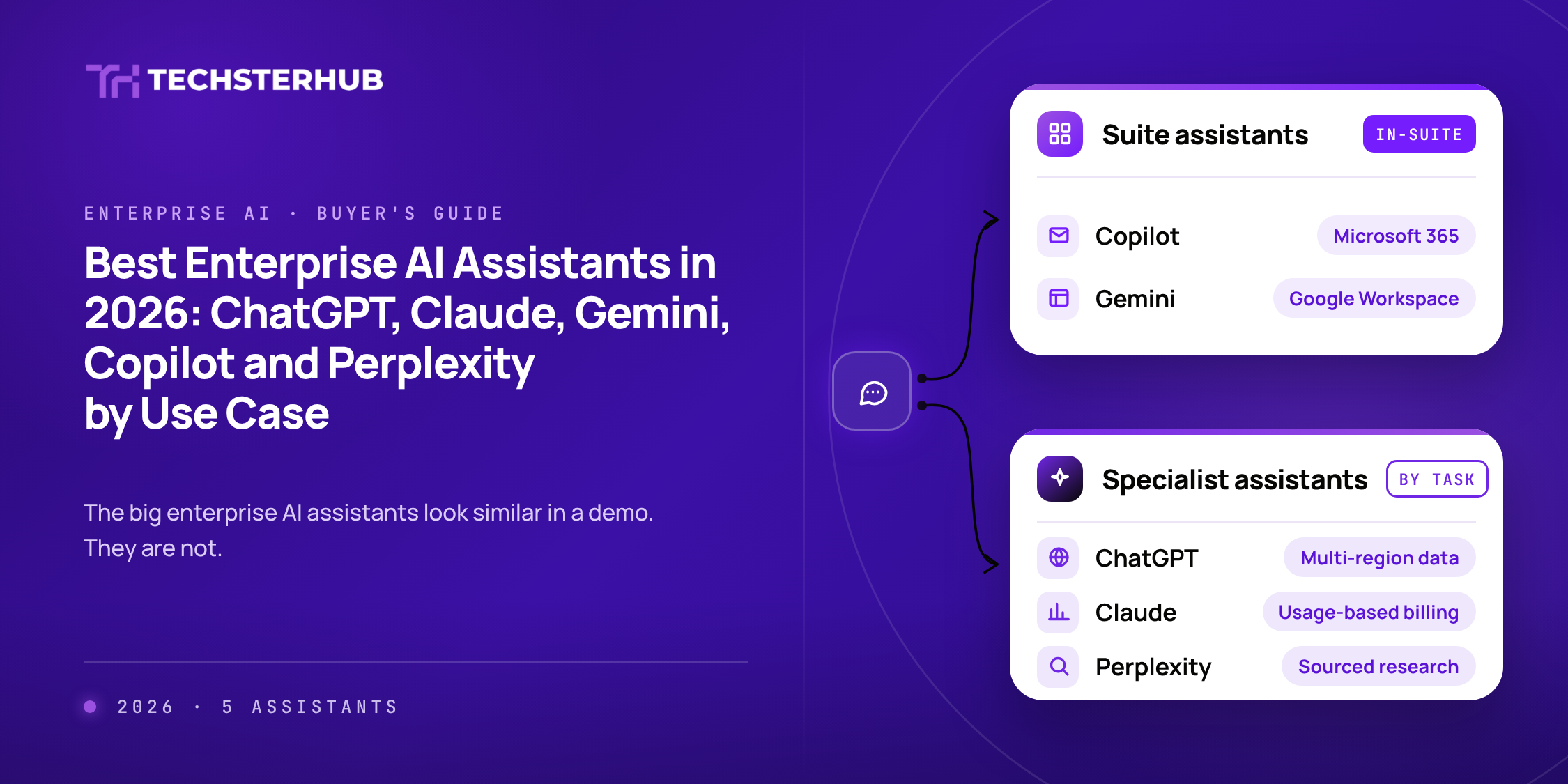
For a wider view, including Microsoft 365 Copilot and Perplexity, see our guide to enterprise AI assistants by use case. For the policies around rollout, read our AI governance framework.
FAQs:
ChatGPT vs. Claude vs. Gemini: Which is best for business?
It depends on your stack and needs. Gemini fits Google Workspace companies, ChatGPT Enterprise suits broad use with regional data residency, and Claude suits long-document, writing, and coding work.
How much does Claude Enterprise cost?
Claude lists Enterprise at $20 per seat per month billed annually, with a 20-seat minimum, plus usage billed at API rates.
How much does ChatGPT Enterprise cost?
OpenAI prices ChatGPT Enterprise by quote, combining seats with a shared credit pool for advanced features.
Is Gemini Enterprise priced per seat?
Google directs buyers to Google Cloud sales for Gemini Enterprise pricing and offers a 30-day trial of the Plus edition.
Do these AI plans train on company data?
All three vendors state that business content is not used to train their models by default on these plans.
Is Claude better than ChatGPT?
Model quality changes often, so compare the plans on your own tasks. Claude lists larger context windows, while ChatGPT Enterprise offers wider data residency.