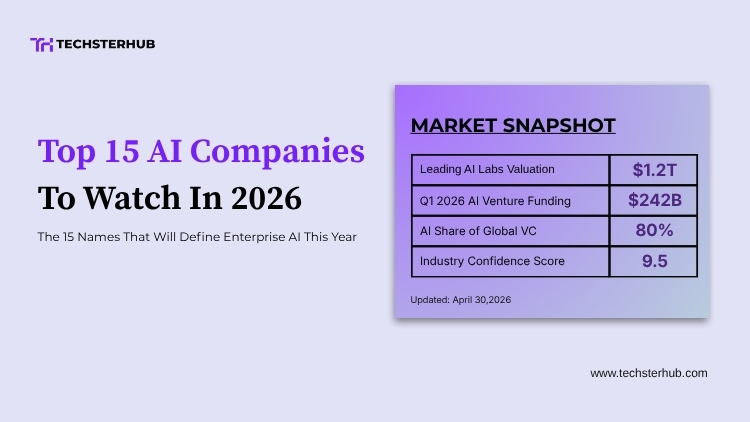
The investment in Artificial Intelligence (AI) is in a new stage. It has been estimated that the amount of money that will be spent on AI in the world will reach about US $1.48 trillion by the year 2025, up to the figure of about US $988 billion in the year 2024 (Gartner). What is this surge, not dollars, not strategy, not risk, not opportunity, not long-term market transformation? This is not a statistic to policy makers, tech leaders, or consumers, but rather a point of change.
The Breakdown of AI Spending: The Big Number is much larger
Spending intelligence would give us visibility of where money is flowing to; the bottlenecks; and the value shall be earned.
Some of the key areas that contributed to such growth:
- GenAI Smartphones & Devices: This is one of the most rapidly expanding categories. In this category, spending will rise to almost US$ 298 billion in 2025 when AI capabilities are added to consumer equipment.
- AI‑Optimized Servers & Infrastructure (including GPUs, accelerators): As big demands on compute, training and inference workloads are growing interest in specialized hardware. This covers the spending of AI optimized servers to increase to an amount of ~US 267.5 billion in 2025.s
- AI Application & Infrastructure Software: Software layers enabling AI (middleware, infrastructure, platforms) are seeing rapid growth. Application software, infrastructure software, and services are all expanding as enterprises attempt to integrate AI into existing operations more deeply.
These statistics are not merely an instance of hype or hortatory. They propose the coming-of age of AI implementation: pilot projects to actual costs of operations, hypothetical research to practical need.
Key Drivers: What’s Accelerating AI Spend
There are a number of collateral forces that are driving AI spending this fast:
- Hyperscale & Cloud Provider Investments
Both large cloud vendors (AWS, Microsoft Azure, Google Cloud, etc.) and smaller vendors especially in China are adding data center capacity, launching GPU/accelerator farms, and optimizing infrastructure to handle AI workloads. They are low-scale investments but they involve high fixed costs as a way of scaling enterprise use of AI and consumer uses of AI. - Consumer Device Innovation
The trend is for AI to be built not only by software into devices (smartphones, PCs, wearables, etc.) but also hardware functionality. This is spurring expenditure on not only expenditure on backend infra-structure, but device level innovation. - Venture Capital and Startup Ecosystem Vibrancy
Most startups are capitalizing on the development of AI models, domain specific AI applications, and cloud-based tools. Such investments highlight and support the anticipations of good returns and they can frequently compel the incumbents to react intrusively. - Global Competition & Geopolitical Pressures
It is becoming more apparent that the firm’s AI capacity has turned into an economic and strategic asset. Nations are pursuing decreasing reliance on foreign AI infrastructure, to create local R&D, to control the flow of data more strictly and to be sovereign in key technologies. This drives both state and private sector expenditure.
The trend of investment elsewhere out of the U.S. towards parts of Asia, Europe and others is observed and recorded well in the report: (Although there may not be all such numbers broken by region in the report, the trend is evidently visible).
- Maturation of AI Projects & Business Models
Some organizations are shifting to operational AI – operational, customers, product, supply chains, and more. The change needs permanent infrastructure, solid software, risk management, compliance etc., and all this needs financial resources. Therefore, increased capitalization of capital holiday, servicing, and personnel.
Strategic Risks & What Could Go Wrong
It is nontrivial risk associated with the high growth. Good leaders must look at the following:
- ROI Uncertainty: Blistering investment does not necessarily lead to corresponding returns. AI projects may turn into sunk costs if they are improperly scoped, fail to support business objectives, and are neglected in the post implementation support phase.
- Talent and Skills Gap: Recruiting or training AI skills (data science, model engineering, MLOps, ethics/compliance) is a costly and competitive proposal. Equipment’s may not come in on time or unite to produce results.
- Operational Costs & Energy Footprint: AI scale computations will require power, cooling, network, and storage. To manage costs and ensure sustainability, efficiency optimization (computational and environmental) would need to be hit.
- Regulation & Privacy Risks: The widespread use of AI is getting more controlled by the government: data privacy, AI ethics, liability in case of AI misbehavior, model results transparency. Global information exchanges, IP rights, or AI produced content are spheres that are likely to be legislatively and policy-imposing.
- Concentration of Power: Additionally, scale (hyperscale) benefits will accrue disproportionately to big players (large manufacturers of devices). Small companies, startups, and less geographically resourced areas might not compete without niches or policy support.
Clues: What successful Organizations must Do
To leverage the competitive advantage aspect of this trend to gain advantage (instead of losing the edge), the following are the strategic levers:
- Make AI Investment a Fit with Intelligible Business Results
There is no need to invest only to keep up. Select AI projects that have performance KPIs which can be measured in monetary terms (cost savings, revenue increase), operational risk (reduction or mitigation), customer experience. Focus on those that can provide both instantaneous and develop grounds to long term innovation (data infrastructure, model pipelines, ethical oversight). - Invest in Modular, Scalable Infrastructure
Elastic compute, hybrid cloud, edge compute infrastructure allows the scale to grow without the abrupt cost hikes in case of incremental growth. Infrastructure investment in model training, deployment, monitoring (MLOps), will likewise lessen aggravation and technical debt threat. - Focus on Efficiency & Sustainability
Efficiency is important as 2. Abu Dhabi: Compute and energy cost is growing. Optimized hardware, efficient algorithms, model pruning, quantization, taking advantage of device AI where available, data centers running on renewable energy – all of these will become competitive advantages. - Talent Strategy & Ecosystem Collaboration
Create teams within the organization, yet partner with universities, research laboratories, start-ups. It could be considered partnerships or acquisitions that introduce specialized skills. Industry organizations and governments can assist in providing shared amenities, training courses etc. - Risk & Governance Frameworks
Assure privacy, confidentiality, equity, integrity. Ahead of innovations on regulations. Introduce transparency to AI models (exploitability, bias audits). When/and/when AI causes harm, it is critical to be prepared (legal, ethical, reputational) as much as capable. - Monitor Geopolitical & Policy Landscape
Taxation systems, export controls on artificial intelligence hardware / chips, localization of data, regulation of cross borders – all of these may influence cost, scalability and supply chain of artificial intelligence globally. Unexpected can be limited by strategic foresight here.
The Implication of this on India and the new economies
Most of the investment in this forecast is biased on the well-established technical centers, but it has valuable insight into India and other comparable markets:
- The Indian opportunity, in this new AI economy: Indian can be a consumer and a producer alike: device creation, software and model creation, cloud/data center infrastructure Time: vernacular AI solutions can expand dramatically.
- India has major opportunities that can be exploited by startup businesses through cost plays, knowledge in the domain due to an established language and local conditions, and increased digital penetration. However, they will have access to capital, talent and favorable regulation.
- The policy makers have to strike a balance between incentivizing investment (tax breaks, infrastructure subsidies) and guarantees: data protection laws, ethical AI guidelines, transparency requirements.
- To India (manufacturing, finance, healthcare, agriculture): In these sectors, AI has transformational potential, however, to implement it, one should combine it with upskilling and investing in connectivity, infrastructure, and trusted sources of data.
The Future of Fitness: What to Expect in Fitness in 2026 and Beyond
According to the trajectory and expert signals by Gartner:
- Some of the same segments will fuel further growth: feeding up to US$2 trillion in 2026.
- Consumer integration (equipment, smartphones) will keep narrowing the distinction line between equipment and AI service, and AI functions will become a fundamental distinction on major markets.
- The complexity of AI models, Multimodal Systems (text, image and audio etc.) foundation models will become more infrastructure backbones.
- Regulatory regimes will be increasingly restrictive; more legislation probably will be enacted concerning data privacy, AI responsibilities, maybe even taxation of AI output or AI utilization.
- Sustainability in environment (energy, carbon) will become a matter of scrutiny; sustainable AI will cease to be a tier 2 concern.
Conclusion
The projection of spending on AI to reach up to US$1.5 trillion in 2025 is not another growth figure. It is the transition to a new stage: AI is becoming non-Walmart. This calls upon those leading businesses, governments, technologists and investors.
Whether this wave of spending turns into a sustainable benefit or a warning tale of an overcommitted self will depend on what you do next – where you free up investments, how you develop your capabilities, how you address risk. Opportunities are enormous to those who are prudent in their course of action, disciplined and futuristic.